Categories

Transport trolleys
(Products: 5)Warehouse trolleys
Trolleys play a key role in the efficient movement of goods in warehouses and industrial facilities. These trolleys are specialized carriers or platforms designed to carry and transport materials, products, or equipment from one location to another. The use of trolleys is especially common in warehouses where handling goods is a routine part of logistics operations.
Here are some key aspects of warehouse trolleys:
Types of transport trolleys:
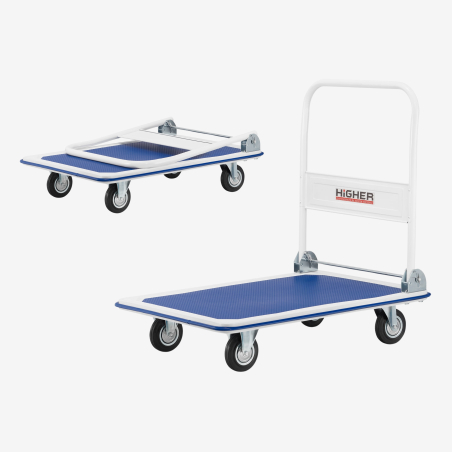
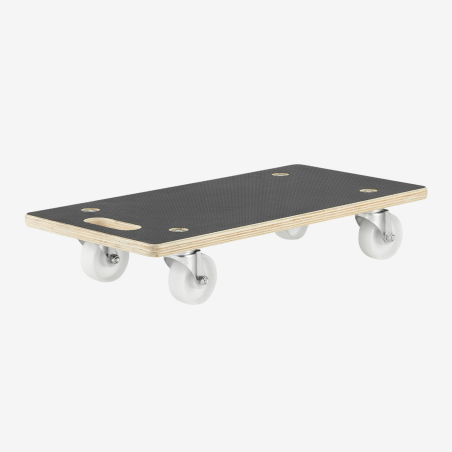
- Platform Trolleys: Simple, flat platforms with wheels for transporting a variety of goods.
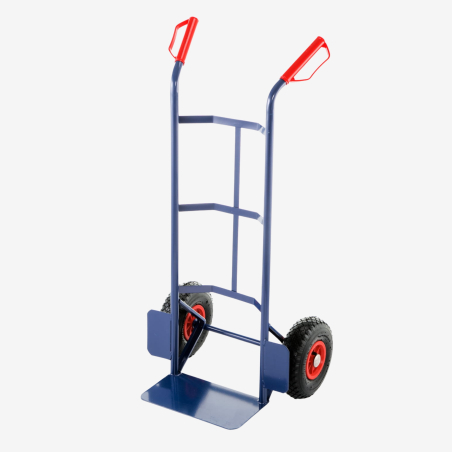
- Hand Trucks: Designed for manual transport, often with handles to aid maneuverability, and covered to protect hands from abrasion, crushing, or snagging injuries in narrow passages.
- Pallet Trucks: Popular "pallet trucks" used to move goods on pallets, usually manually or electrically operated.
- Cage Trolleys: Equipped with wire sides or cages to secure and hold items during transport. Often very high-sided and found in the warehouses of almost every courier company.
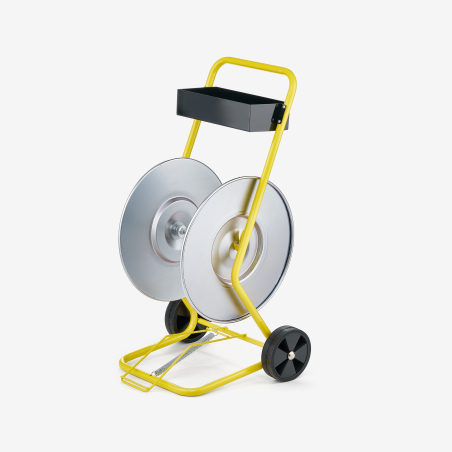
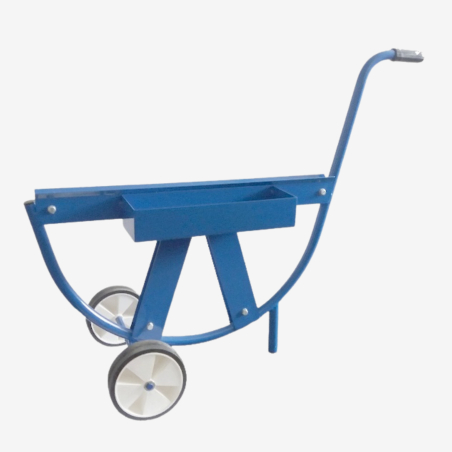
- Specialist trolleys: Custom-designed for specific industries or applications. For example, for transporting carcasses in a slaughterhouse, taking into account the specific type of load, low temperature and high hygiene requirements.
Materials used in the construction of warehouse trolleys
The trolleys are made of durable materials such as high-quality steel, aluminum or durable plastics. The wheels can vary in size, material and filling type, depending on the load capacity and type of flooring in the warehouse.
Capacity
The trucks have different load capacities, which allows them to handle goods of different types and sizes. Load capacity is a key factor in ensuring safe and efficient transport operations. Very high load capacities usually require electrical assistance to control and move the truck.
Maneuverability
Carts should be designed to be easy to maneuver and have features such as swivel wheels or casters. Some carts may have ergonomic handles or even steering systems for comfortable handling.
Power supply
Although most hand trucks are manually operated, some may be equipped with electric or battery systems to make moving them easier, especially with large loads.
Warehouse efficiency
The use of trolleys increases the overall efficiency of warehouse operations by reducing manual handling, minimizing the risk of injury and speeding up the flow of goods.
Integration with warehouse systems
In modern warehouses, trolleys can be integrated with automation and warehouse management systems to optimize the flow of goods. You can find more on this in our article on automation and robotization of warehouse processes .
Security features
Carts are often equipped with safety features such as brakes, locking mechanisms or anti-tip structures to prevent accidents during transportation.
Cost considerations
The cost of a cart varies depending on factors such as load capacity, materials, and additional features. Warehouses must consider their specific requirements to determine if a particular type of cart is the one that will be worth purchasing.
Impact on the environment
Some warehouses may prioritize environmentally friendly solutions, leading to the use of carts made from recyclable materials or designed for energy efficiency.
Carts are essential tools in warehouse logistics, contributing to the efficient and organized flow of goods. They come in various types and configurations, adapted to the specific operational needs in the warehouse environment. As technology advances, the integration of intelligent systems and automation is likely to further increase the efficiency and effectiveness of cart operations in warehouses.