Categories

Wood wool
(Products: 2)Wood wool - decorative shavings to fill the package
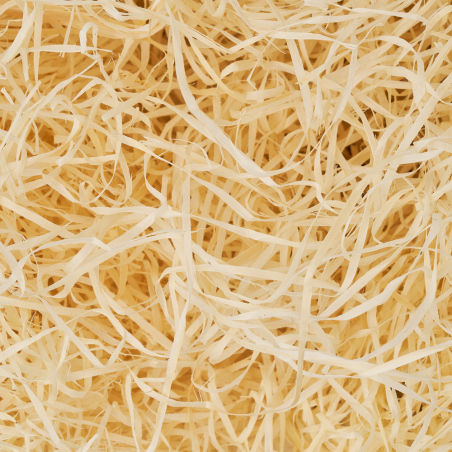
Wood wool, commonly known as "hay", is a lightweight, biodegradable filler made from shredded wood that fills empty spaces in packages. Many people have probably seen wood wool in a Christmas basket or in a cheese and wine set at the supermarket. The thing is, few people know more about it...
Wood wool was invented over 200 years ago and became very popular in the pottery industry and was used to protect items during transport by horse-drawn carts. In the early 19th century, wood wool was the most popular form of bulk packaging, but in the 1950s it was replaced by polyethylene, which charmed entrepreneurs.
These were times of zero ecological awareness - one of the reasons why most wood wool factories were eventually closed and its production practically ceased to exist!
Polyethylene was produced in a different way than today, using technology that had a very negative impact on the atmosphere and with no concern for recycling. Nowadays, however, polyethylene is often obtained from recycling, and wood wool is experiencing a renaissance as a filler .
Wood wool is also called wood wolin or wood viola , and colloquially hay for gifts . It is obtained, as the name suggests, from wood. Its main advantage is its low price in relation to the visual effect it produces. It fits virtually any type of gift. It has positive associations related to luxury goods, such as the transport of alcohol, and to nature, because despite processing it retains the warm character of wood.
Features and applications:
-
Suitable for packaging food products such as eggs, etc.
-
Excellent shock-absorbing properties - used to transport highly unstable and explosive nitroglycerine and dynamite
-
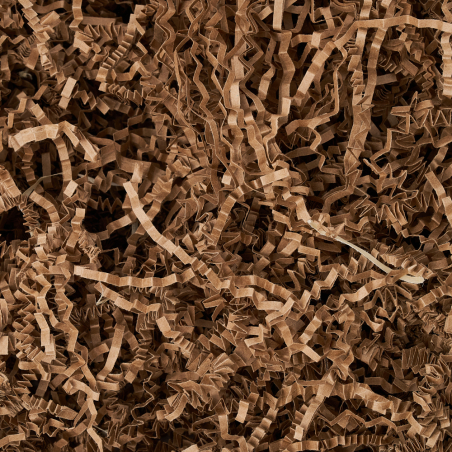
Currently available colours are shades of natural wood colour and brown.
Where is the best place to buy it?
Wolina is easy to modify in color - there are virtually no limitations in this regard, so it is very likely that someone has produced it in the color desired by the user. Even if not, the manufacturer can probably dye it any color if the appropriate logistical minimum is maintained.
It is worth ordering it from stores that obtain it from waste accompanying wood processing. Leftovers from furniture production or boards in the sawmill are used in this way. Cutting down trees just to process them into chips would be barbaric. Wood wool is therefore often categorized as an ecological filler for gifts .